If privacy sits at the top of your home search, Easton deserves a close look. In a part of Fairfield County where many buyers compare shoreline settings, village centers, and suburban neighborhoods, Easton offers something different: a land-first lifestyle shaped by open space, low-density planning, and detached homes on larger parcels. If you want more screening, more breathing room, and a setting that feels tucked away without leaving the county, this guide will help you understand why Easton stands out. Let’s dive in.
Why Easton Appeals to Privacy-Focused Buyers
Easton’s identity is rooted in rural character, and that is not just a matter of perception. The town notes that it has more than 20 working farms, more than one-third of its land is permanently preserved, and a landscape that includes four reservoirs and trout streams. That preservation pattern helps support the sense of space many privacy-minded buyers are looking for.
Easton is also relatively low density by the numbers. The Connecticut Department of Public Health estimated the population at 7,815 in July 2024, and the census places the town’s land area at 27.4 square miles. For you as a buyer, that can translate into a setting that feels more spread out and less compressed than many other options in lower Fairfield County.
The housing profile reinforces that feeling. The owner-occupied housing rate is 88.1%, which points to a market defined largely by long-term homeowners rather than a high volume of short-term turnover. If your goal is a more settled residential environment with room to breathe, Easton aligns well with that search.
Easton’s Housing Pattern Favors Space
One of the clearest reasons Easton attracts privacy-oriented buyers is the nature of its housing stock. Census data reports 2,741 total housing units, with 2,673 of them classified as one-unit detached homes. That means 97.5% of the housing stock is detached single-family housing.
In practical terms, Easton is not a market built around dense clusters of attached homes or compact residential blocks. Instead, it is overwhelmingly defined by detached residences and larger-site living. If you are looking for estate-style ownership, this backdrop matters.
The town’s 2022 Affordable Housing Plan notes that accessory dwelling units, caretaker cottages, two- and three-family buildings, and other properties with more than one dwelling unit do exist in town records. Still, those property types are secondary to the town’s dominant detached-home pattern. For most buyers seeking privacy, that is an important distinction.
Lot Size Matters in Easton
Easton’s zoning structure helps explain why the town often feels more spacious. In Residence A zones, the minimum lot area is 40,000 square feet, with a minimum buildable area of 34,000 square feet. In Residence B zones, the minimum lot area is 3 acres, with a minimum buildable area of 2 acres, plus 200 feet of frontage and 40-foot side and rear setbacks.
Those rules are meaningful because they shape how homes sit on their land. Larger minimum lot sizes and setback requirements can support more separation between homes, more screening potential, and a more private arrival experience. For buyers comparing Easton with denser Fairfield County locations, this planning framework is a major part of the appeal.
There is one important nuance. Easton regulates buildable area as well as gross acreage, so a parcel that looks large on paper may not offer the same usable area across every section of the land. Wetlands, septic requirements, and other site constraints can affect what is practically usable, so due diligence is essential.
What Privacy Looks Like on the Ground
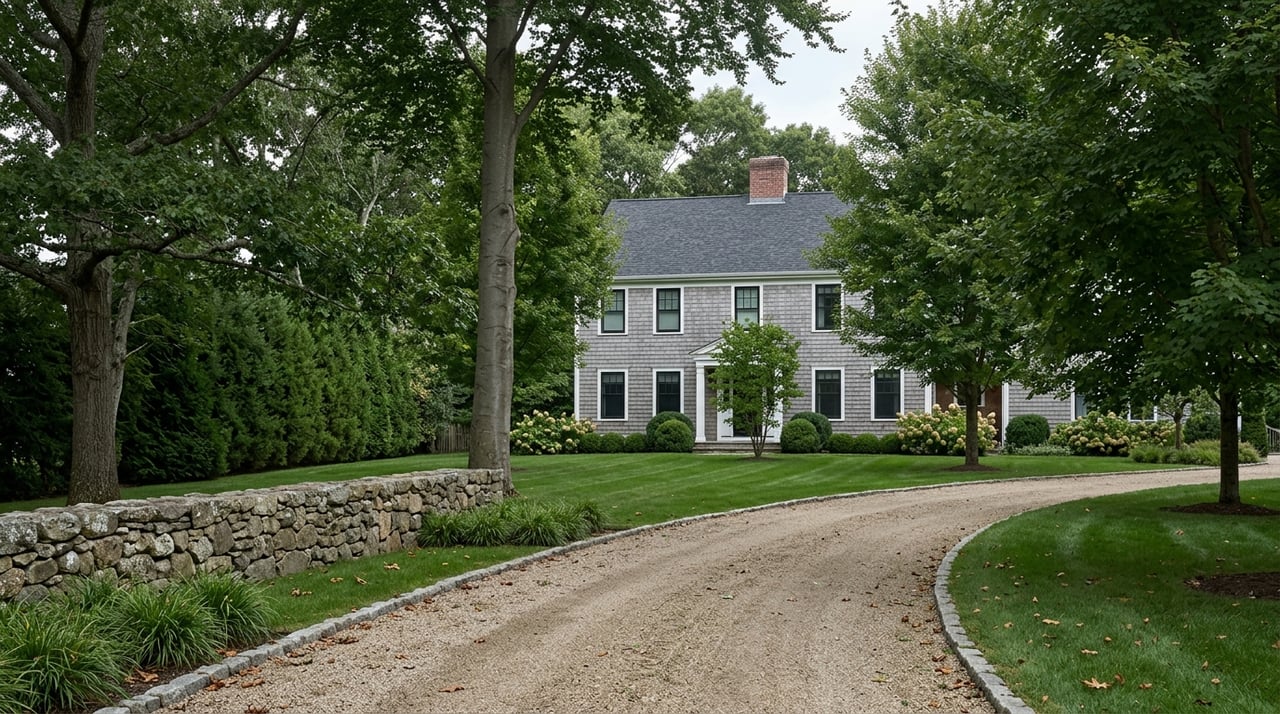
In Easton, privacy is often less about gates and more about land, topography, and preservation. Mature trees, longer driveways, preserved open space, and lower-density zoning all contribute to a quieter estate-style feel. That can appeal to buyers who want discretion in a more natural landscape rather than a highly formal luxury setting.
This is also why Easton can fit buyers making a strategic tradeoff. If you are moving away from a busier shoreline pattern or a tighter neighborhood layout, Easton offers an alternative centered on acreage and screening. You remain in Fairfield County, but the day-to-day setting can feel notably more secluded.
For some buyers, that shift is the point. You are not just buying a home here. You are buying a different relationship to land, space, and the surrounding environment.
Farms and Open Land Shape the Lifestyle
Easton’s agricultural character is a real part of the town, not just a backdrop. The town’s Right to Farm ordinance states that agriculture is central to Easton’s heritage, scenic vistas, wetlands, wildlife, open space, and local economy. That tells you something important about how the town understands and protects its landscape.
The town’s farm map lists more than 20 working farms and specifically includes equine services among local offerings. Named examples include Buttonwood Farm and Gold Rush Farms. For buyers interested in a broader estate lifestyle, this supports the idea that Easton has an active land-stewardship culture.
That does not mean every property is automatically suited for horses, hobby farming, or expanded outdoor use. Parcel-specific conditions still matter, including acreage, access, drainage, and any required health or zoning approvals. Even so, Easton’s local context can be especially appealing if you value usable land and a setting shaped by conservation and farming.
Easton in a Fairfield County Search
For many buyers, Easton works best when viewed as part of a broader Fairfield County strategy. The town’s 2018 to 2028 Plan of Conservation and Development supports a generally low-density approach and low-impact development, while also recognizing Easton’s regional water-quality role. In plain terms, the town’s planning priorities support preservation over intensification.
That makes Easton a compelling option if you want to stay within Fairfield County while shifting toward a more private, land-oriented lifestyle. You can still remain connected to the county’s broader residential and commuter network, but in a setting shaped less by density and more by acreage and open space. That distinction is often what draws serious privacy-driven buyers here.
Easton is also part of Region 9, consisting of Samuel Staples Elementary School, Helen Keller Middle School, and Joel Barlow High School. For relocation buyers, it is helpful to know how the town fits into the area’s existing public school structure and broader county framework. The census also reports a 29.3-minute mean commute to work, which helps place Easton within the lower Fairfield County orbit.
What to Evaluate Before You Buy
Privacy in Easton often comes with more land complexity, so it helps to look beyond the headline acreage. A property may offer strong visual screening and a larger lot, but the practical use of that land can vary significantly from site to site. Careful review upfront can help you align the property with your goals.
As you evaluate homes in Easton, pay attention to:
- Buildable area, not just total acreage
- Wetlands and drainage conditions
- Septic considerations and site suitability
- Frontage and setbacks that affect placement and expansion
- Access and layout if you are considering equestrian or outdoor use
- Preserved open space in or around a conservation development
This kind of analysis is especially important if you are looking for an estate property with long-term flexibility. The right home is not only private today, but also well matched to how you plan to use the land over time.
Easton’s Best Fit Buyer
Easton is not the ideal answer for every Fairfield County buyer, and that is exactly why it can be such a strong answer for the right one. If you want a compact, walkable village environment or a shoreline setting, you may find other towns better aligned with that goal. Easton stands apart because it offers a more rural, detached, and preserved landscape.
For buyers seeking quiet, screening, and estate-style living, that difference can be powerful. Easton gives you a chance to prioritize privacy without stepping outside Fairfield County. If your search is centered on land, separation, and a setting that feels protected by design, Easton deserves serious consideration.
Buying a private estate property requires more than a quick scan of lot size and listing photos. It takes local context, thoughtful review of land characteristics, and a clear sense of how a property fits your long-term goals. If you are considering Easton or comparing it with other private home options in lower Fairfield County, Andrew + Wendy offer the discreet, relationship-driven guidance that helps buyers move with clarity and confidence.
FAQs
What makes Easton, CT attractive for buyers seeking privacy?
- Easton stands out for its rural character, preserved land, low-density planning, and housing stock that is overwhelmingly made up of detached single-family homes on larger parcels.
How common are detached homes in Easton, CT?
- Census data reports 2,673 one-unit detached homes out of 2,741 total housing units, which means 97.5% of Easton’s housing stock is detached.
What should buyers know about lot sizes in Easton, CT?
- Easton zoning includes large minimum lot requirements, such as 40,000 square feet in Residence A and 3 acres in Residence B, but buyers should also verify buildable area, wetlands, and septic constraints.
Is Easton, CT a good option for estate-style living?
- Easton can be a strong fit for estate-style buyers because of its larger parcels, preserved landscape, detached housing pattern, and town planning that supports low-density development.
Does Easton, CT have a farming or equestrian presence?
- Yes. Easton has more than 20 working farms, and the town’s farm map specifically includes equine services, showing a real agricultural and equestrian presence in the community.
How does Easton, CT fit within Fairfield County?
- Easton offers a more land-focused and private lifestyle while remaining within Fairfield County’s broader residential, school, and commuter network.