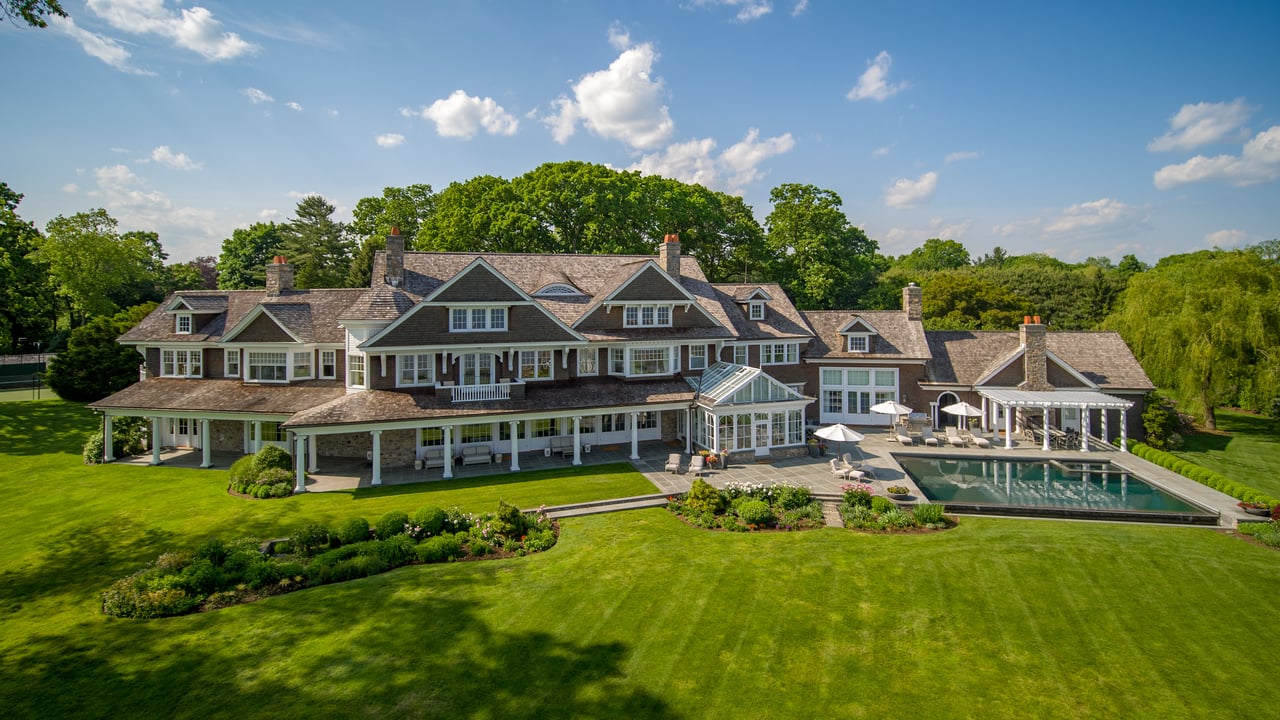
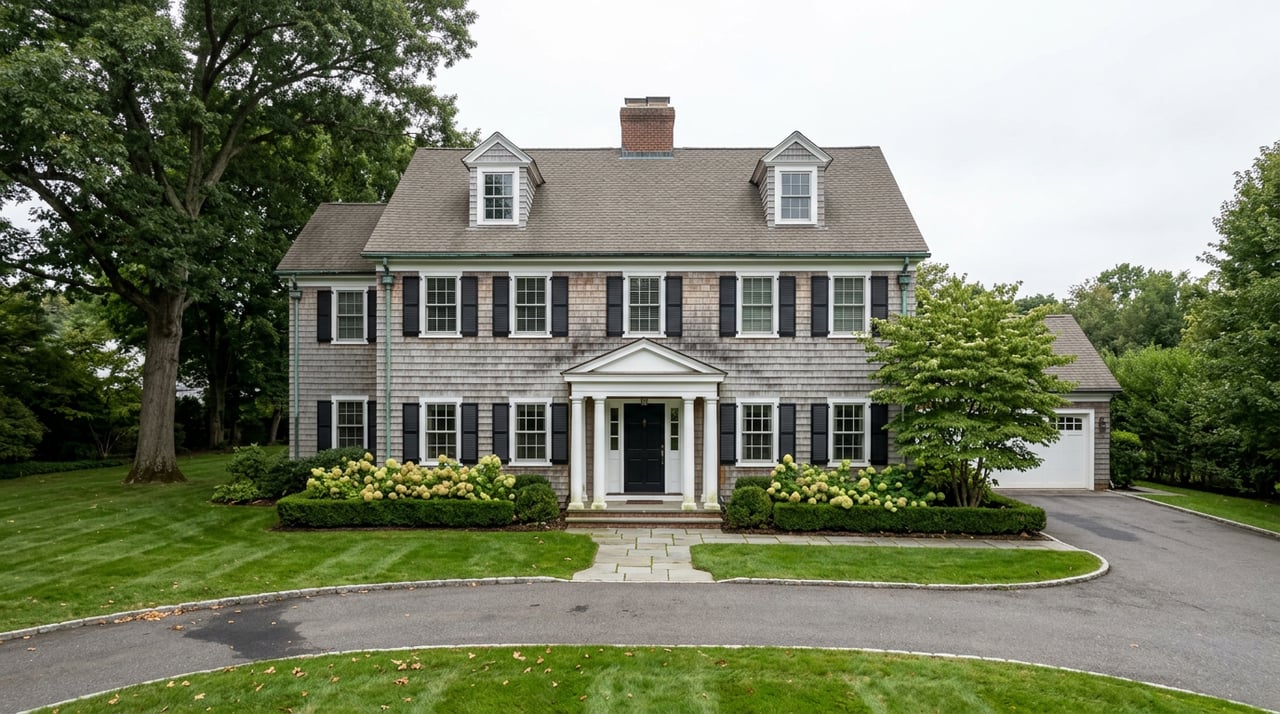
Picture two sellers listing homes in Darien this September. One owns a shingle-style colonial a few blocks off the Goodwives River, the kind of property that has never taken on water in living memory. The other owns a shorefront estate on Long Neck Point, with a private dock and unobstructed Long Island Sound views. Both are preparing disclosure paperwork this month. Only one of them is dealing with a flood map that changed underneath their property in the last thirty days, and it is not the one with the water view.
That is the part of this story that gets missed. Darien's flood conversation has always been framed around the Sound. This year's actual regulatory event is happening upriver.
The Map That Just Moved
New FEMA flood insurance rate maps for Darien's riverine watersheds took effect in August 2026. The timeline was not simple. The Flood Insurance Rate Map and Flood Insurance Study were originally scheduled to become effective in November 2025, but the federal government shutdown that October and November pushed the Letter of Final Determination to late February 2026, which in turn pushed the maps themselves to this August, according to the town's own posted update.
The town has also been explicit about scope. This remap covers riverine locations only. Coastal panels, the ones covering Tokeneke, Long Neck Point, and the rest of the Sound-facing shoreline, are not part of this update. Those panels remain on the baseline FEMA established in 2010 and 2013, and this year's riverine work does not touch them.
This is not the first time an inland Darien watershed has been remapped, and the reaction has followed a pattern before. Back in 2014, Milone and MacBroom, the engineering firm the town retained after the 2006 and 2007 floods, presented findings that expanded flood zones along Stony Brook and the Goodwives River, and homeowners on Hamilton Lane who had never seen water on their property pushed back publicly, according to reporting at the time. First Selectman Jayme Stevenson's response captured the tension precisely: property owners were, in her words, in the flood plain "by virtue of modern analysis," whether or not the ground had ever gotten wet. That 2014 revision was itself riverine, not coastal, the same distinction that defines this year's update.
Not the Water You'd Expect
If you are selling near the Sound this fall, this particular update does not change your flood zone status. Your property is still sitting on the older coastal panels, and the general coastal flood insurance requirements that have applied for over a decade still apply. That is a different kind of stability than "no risk." It just means nothing new landed on your desk this August.
If you are selling anywhere near the river corridor, the calculus is different. A parcel that sat outside a Special Flood Hazard Area under the old maps may now sit inside one, or the reverse. Either way, you are dealing with a status that changed within the last month, not a status that has been settled for a decade. That distinction matters more than it sounds like it should, because Connecticut's disclosure practice does not ask you to guess at future risk. It asks what you currently know. A map that changed in August is now something you know.
What This Means on the Disclosure Form
Connecticut sellers are expected to disclose known flood hazards affecting a property, not just documented flood damage. A remap that just moved your parcel's designation is squarely inside that category. Waiting until a buyer's lender flags it during underwriting is the expensive way to find out.
The practical sequence matters too. The National Flood Insurance Program carries a standard 30-day waiting period before a new policy takes effect, a detail FEMA spells out plainly in its own guidance for property owners facing a map change. If your closing timeline is tight and your parcel just moved into a higher-risk zone, that 30-day window is not something to discover the week before closing. It needs to happen at listing prep, alongside pulling your panel number and, if the new designation calls for it, arranging an elevation certificate from a licensed surveyor or engineer.
Here is how the fall season splits by location:
|
River corridor seller |
Sound-front seller |
| Flood map status |
Changed in August 2026 |
Unchanged, effective since 2010–2013 |
| Disclosure obligation |
New known fact to address before listing |
Existing, already-priced-in risk |
| Insurance timing |
Get a quote now, 30-day NFIP wait applies |
Renewal cycle likely already established |
| Elevation certificate |
May be newly relevant |
Typically already on file if ever needed |
A Market That Looks Looser Than It Actually Is
The timing gets more interesting when you look at what Darien's market did in the same month. In August 2026, the single-family median sale price reached $2,972,500, up 29.2% from August 2025. On its own, that number says the market is on fire. But days on market rose to 28, up 64.7% year over year, inventory climbed to 28 active listings, up 21.7%, and months of supply rose to 1.60, up 38.6%. Read quickly, those last three numbers look like a market that is finally loosening up for buyers.
It is not loosening. It is bifurcating. Year to date through mid-August, the median sale price in the 06820 ZIP code reached roughly $2.9 million, up 18.4% from the same period a year earlier, while the average sale price climbed to about $3.16 million, up 12.3%. Of the homes sold so far this year, a disproportionate share, more than seventy of them, closed at $3 million or more, and that top bracket grew faster than any other segment. Meanwhile the number of homes sold overall was down for the year, and finding anything under $2 million has become genuinely difficult.
Put those together and the picture sharpens. The slower days on market and the fatter inventory numbers are not evidence that buyers are gaining leverage across the board. They are evidence that more of what's transacting now sits at the top of the market, where homes take longer to find the right buyer and where a wider spread of price points naturally stretches out the average. A river-corridor colonial listed in the $1.4 million to $1.8 million range is not competing in the same market as a $3 million-plus estate. It is competing in a thinner, faster band where the headline median tells you almost nothing about your actual comp set.
For a seller near Stony Brook or the Goodwives River watershed, that means two things arrived at once this fall: a disclosure event tied to a map that changed weeks ago, and a market where the townwide numbers overstate how much patience buyers actually have at your specific price point. Pricing to the median instead of to your real comparables is the kind of mistake that shows up as a stale listing by October.
Before You List This Fall
A few things are worth doing before a sign goes in the yard, regardless of which side of the watershed line your property falls on:
- Pull your current flood panel using the town's map viewer and confirm whether your parcel's designation changed with the August update.
- If it did change, request an elevation certificate and a flood insurance quote now, not after you're under contract.
- Update your disclosure paperwork to reflect what the map currently says, not what it said last year.
- Price against homes that actually match your segment and timeline, not against a townwide median that is being pulled upward by a handful of high-end closings.
A Few Questions Worth Answering Directly
Does this flood map update affect Sound-front properties in Darien at all?
No. The August 2026 update is riverine only. Coastal panels covering the Sound-facing shoreline were not part of this revision and remain on the baseline FEMA established for Darien in 2010 and 2013.
Do I have to disclose a flood zone change if my property has never actually flooded?
Connecticut's disclosure standard is about what you currently know, and a map that just moved your parcel's designation is current, known information, independent of whether water has ever reached your door.
How much lead time should I build in for flood insurance before closing?
FEMA's own guidance notes a standard 30-day waiting period before a new NFIP policy takes effect. Build that into your listing timeline rather than your closing week.
If you are weighing a fall listing near the river corridor, or trying to understand what your Sound-front property's older flood designation actually means for a sale this season, that is exactly the kind of quiet, detail-level conversation Andrew Whiteley & Wendy Ryan have with sellers before a home ever reaches the market. Request a Confidential Home Valuation and we'll walk through what your specific parcel, timeline, and price point actually require.