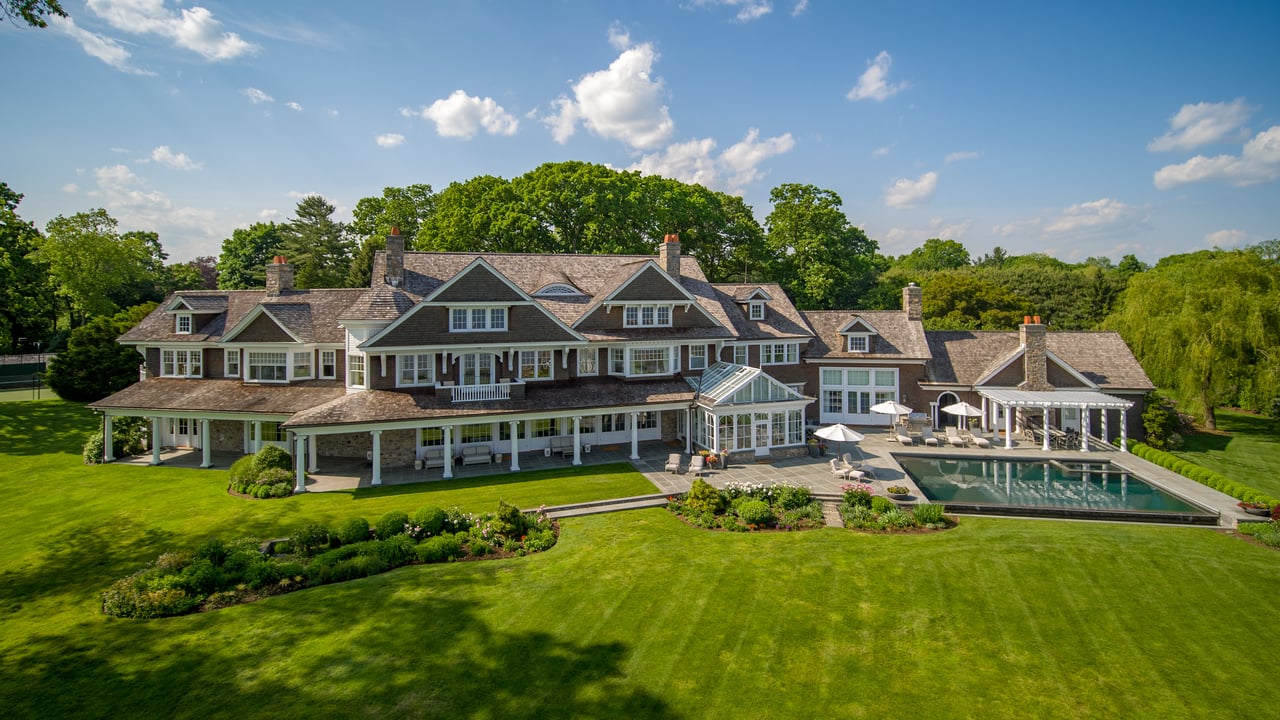
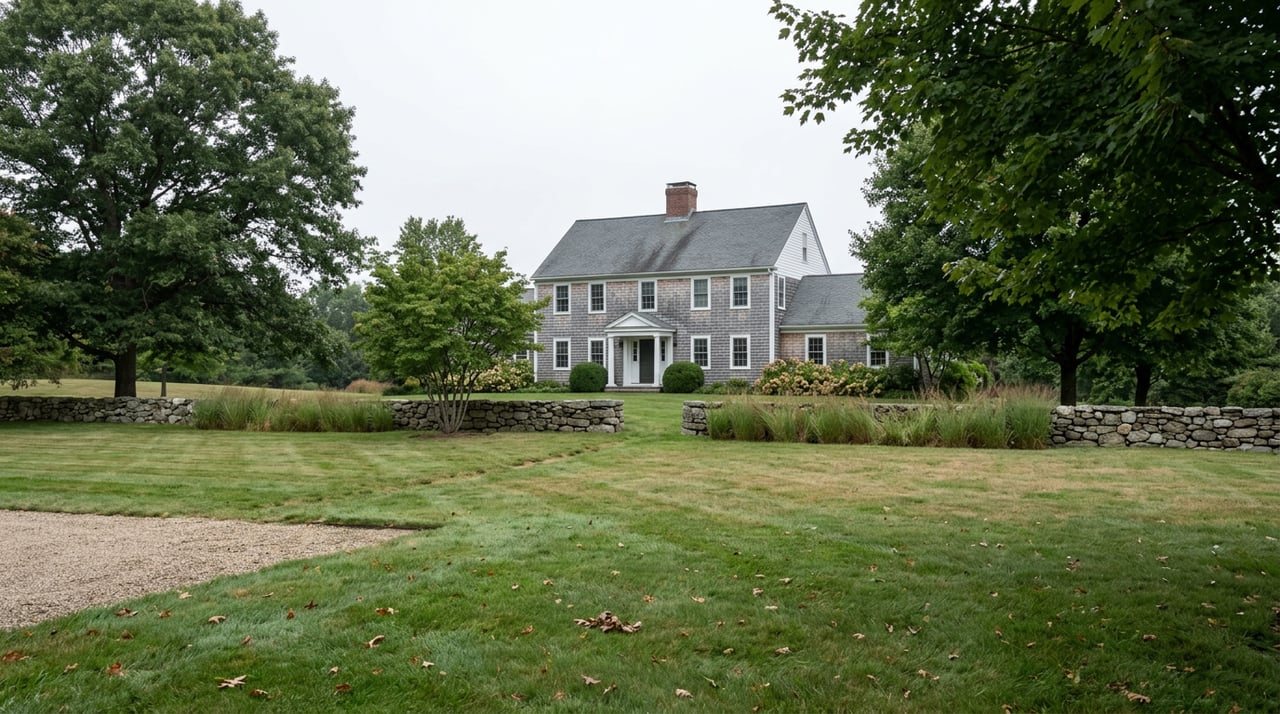
Anyone comparing Easton to Fairfield, Westport, or Southport eventually asks the same question: why does a town twenty minutes from the water still feel like open country. The answer isn't scenery. It's a zoning rule that requires most of the town to be built on three-acre lots, paired with a water utility whose reservoirs sit inside town limits. Both of those load-bearing facts are being argued over in real hearings this year, and the outcome will shape what a large-lot property in Easton is actually worth to own.
That's the part a median price doesn't tell you. As of August 2026, Easton's median asking price sat around $1.19 million, with price per square foot actually down about 3 percent from a year earlier even as the town's characteristic scarcity of buildable land held. A market snapshot from earlier in the year showed homes selling at essentially full asking price with only three weeks on the market. Buyers are already paying for the acreage. What's worth understanding before you're one of them is that the rule creating that acreage is currently on trial, literally, in a Hartford land use docket and at Staples Elementary School.
The Three Acres Were Never Really About the View
Most of Easton sits in a zoning district that requires a minimum of three acres per house. A smaller district covering roughly 8 percent of town acreage allows lots as small as 40,000 square feet. The common assumption is that this exists to protect the reservoirs, the Aspetuck and the Easton Reservoir, both of which sit within town boundaries and both of which feed Aquarion Water Company's public drinking water supply.
That assumption is only partly right. Local reporting on the town's original 1941 zoning map has made the case that the three-acre requirement in the northern half of town had less to do with the reservoirs directly and more to do with the ground underneath them. Easton's soil is notably rocky, and a house on a private well and a private septic system needs enough land to keep the two far enough apart, and far enough from the neighbor's well, to keep the groundwater clean. The zoning historian's framing is that Easton's large-lot rule was, at its root, sound public health economics before it was ever framed as environmental protection.
That distinction matters for a buyer today because it explains why the three-acre rule has proven so durable. It isn't just an aesthetic preference the town has voted to preserve. It's tied to the physical reality that almost every house in Easton runs on its own well and its own septic system, with no public water or sewer line to fall back on if either fails. A property inspection here isn't complete until someone has tested the well's yield in gallons per minute, reviewed the septic tank's age and as-built diagram, and confirmed the access risers sit within the twelve inches of grade that local septic inspection standards call for. None of that shows up in a listing photo, and all of it costs real money to fix if it's wrong.
A Developer Is Testing the Line Right Now
The current test of that rule has a name, a street address, and an ongoing court file. EG Home LLC has proposed a subdivision called Saddle Ridge on roughly 110 acres that span 897 Sport Hill Road, 48 Cedar Hill Road, and Westport Road, a parcel that was previously a working horse farm and had been listed in 2021 for $4.5 million as, at the time, the largest property for sale in Fairfield County. The proposal is the first application filed under Section 5900 of Easton's zoning regulations, a Conservation Cluster Housing provision adopted in 2023 that allows lots smaller than the standard three acres in exchange for preserving open space elsewhere on the parcel. The plan calls for lots mostly under two acres, with one as small as .96 acres, on land that occupies the headwater drainage for both the Aspetuck and Easton Reservoirs.
Aquarion filed formal comments on the application, and Citizens for Easton, a resident advocacy group that has opposed successive versions of development on this same parcel since at least 2009, has made the same underlying argument across every round of the fight:
"Easton does not have the infrastructure to support intensive development. We rely upon individual wells and septic systems on watershed land."
As of this summer, the outcome remained unsettled. The Conservation Commission denied an earlier version of the plan, the developer is now suing over that denial, and a revised 24-lot version has continued through its own round of hearings, with the most recent hearing on that revised plan tentatively scheduled for late July 2026. Whatever the commissions ultimately decide, the case sets a template. If Section 5900 clears a path to sub-two-acre lots on sensitive watershed land, it becomes the reference point for the next developer who wants to do the same thing on a different parcel. If it fails, the three-acre standard gets reinforced as close to non-negotiable. Either way, a buyer purchasing adjacent to or near watershed-zoned land in Easton right now is buying into a rule that is actively being tested, not a rule that is settled.
The Utility That Owns the Watershed Just Changed Hands
The second piece buyers tend to miss is who actually controls that watershed land, and that answer changed in 2026. Aquarion Water Company, which owns reservoir and watershed acreage across dozens of Connecticut towns including Easton, was the subject of a $2.4 billion sale from its parent company Eversource to a newly formed nonprofit, the Aquarion Water Authority, affiliated with the South Central Connecticut Regional Water Authority. Connecticut's Public Utilities Regulatory Authority rejected the sale on November 19, 2025, citing concerns about the new authority's governance structure. Aquarion and the buyer appealed, and in January 2026 a New Britain Superior Court judge ruled that PURA had overstepped part of its authority and sent the case back for reconsideration. By March 2026, PURA reversed course and approved the sale in a 3-0 vote, clearing the way for it to close later in the year.
The sale's own filings disclosed annual rate increases of 6.5 to 8.35 percent through 2035, with further increases expected every five years after that. Consumer Counsel Claire Coleman's office put the total acquisition and financing cost to ratepayers at roughly $5.9 billion, built on top of a $2.249 billion purchase price. Most Easton homes aren't billed by Aquarion at all. They draw from private wells. But Aquarion's reservoirs and watershed holdings run through a meaningful share of the town's undeveloped acreage, and that ownership is exactly what gave the company standing to oppose Saddle Ridge in the first place. A change in who runs that company, and a disclosed intent to raise rates for years to come, is relevant background for any buyer trying to gauge how aggressively Easton's watershed protections will be defended going forward, and what it might cost the town's water-connected households in the meantime.
What This Actually Changes for a Buyer
None of this means Easton's rural character is at risk of disappearing next year. Three-acre zoning has held since 1941, survived multiple prior development fights on this same parcel going back to at least 2009, and remains the default for most of the town's 18,282 zoned acres. But a buyer weighing Easton against a town with public water and sewer should walk in with eyes open on a few specific points:
- Private well and septic due diligence is not optional here the way it might be elsewhere in lower Fairfield County. Ask for the well's flow test results, the septic system's as-built diagram and pump-out history, and confirm there's no cesspool or single-compartment tank, both of which are treated as red flags under current guidance.
- If a property sits near or within the Aspetuck or Easton Reservoir watershed, the Saddle Ridge case is worth tracking even after closing. Its outcome will influence how much development pressure that land sees in the coming years.
- If a property does carry an Aquarion water connection, budget for rate increases in the mid-to-high single digits annually through at least 2035, a figure disclosed in the utility's own sale application rather than a projection from outside analysts.
- Inventory has stayed tight through 2026 for a reason. Scarcity of buildable, code-compliant large lots is a direct downstream effect of the same zoning rule now under legal challenge, which is part of why homes here have been trading close to asking price with limited time on market.
Easton rewards buyers who understand it isn't just a quiet town with big yards. It's a town whose entire built form rests on a handful of specific, contestable decisions, and this year happens to be one where several of them are being argued out loud.
If you're weighing a purchase in Easton, or trying to understand how a specific parcel relates to watershed land, zoning district lines, or well and septic history, Andrew Whiteley & Wendy Ryan can walk through the particulars with you. Request a Confidential Home Valuation to start a conversation grounded in what's actually happening on the ground, not just what the listing says.